Low Taper Fade vs Mid vs High: Which One Is Best in 2026?
Choosing between a low taper fade, mid taper fade, and high taper fade can be confusing because the three haircuts can look surprisingly similar at first glance.
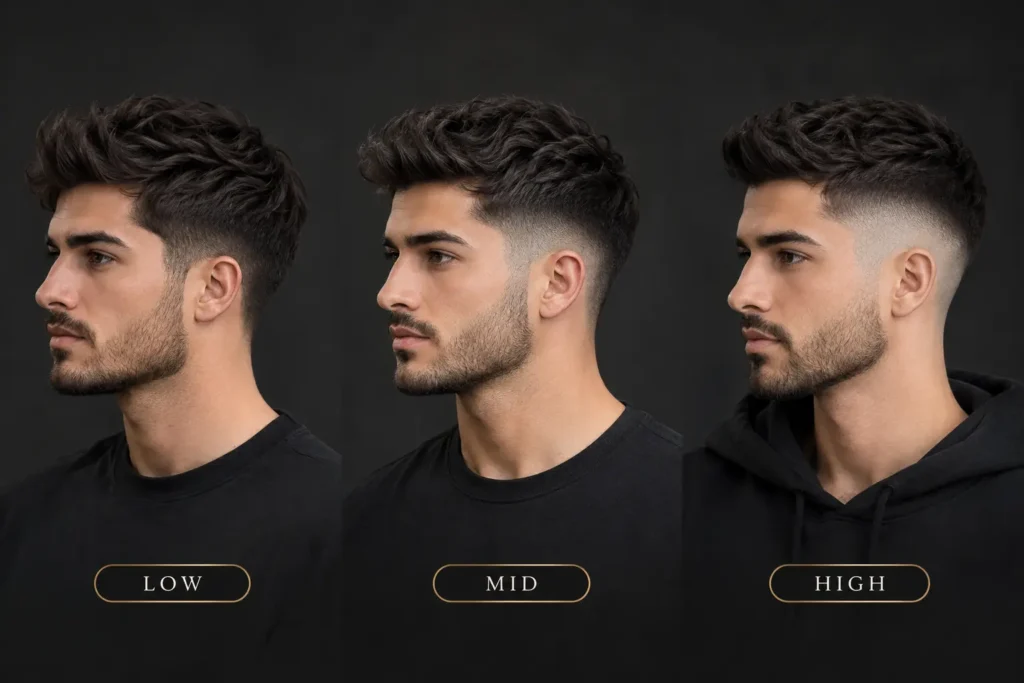
The biggest difference is where the taper begins. A low taper keeps the blend close to the ears and neckline, a mid taper moves the transition higher, and a high taper creates the strongest change higher on the sides.
That small change in height can affect the overall contrast, how much weight remains on the sides, how the haircut grows out, and how it works with your face shape and hairstyle.
So, which taper fade is best for you?
In this guide, we’ll compare low, mid, and high taper fades side by side, explain the pros and cons of each, and show you exactly what to ask your barber.
Quick Answer: Low vs Mid vs High Taper Fade
If you want the answer quickly:
- Low Taper Fade: Best for a subtle, clean and versatile appearance.
- Mid Taper Fade: Best for a balanced look with moderate contrast.
- High Taper Fade: Best for a bold, sharper and more noticeable haircut.
There isn’t one taper fade that is best for everyone. Your face shape, hair texture, hairstyle, workplace, maintenance routine, and personal preference should all influence your decision.
Quick Comparison Table
| Feature | Low Taper Fade | Mid Taper Fade | High Taper Fade |
|---|---|---|---|
| Taper position | Lower | Middle | Higher |
| Overall contrast | Low | Medium | High |
| Hair kept on sides | More | Moderate | Less |
| Overall appearance | Subtle | Balanced | Bold |
| Grow-out | Softer | Moderate | More noticeable |
| Maintenance | Lower | Moderate | Higher |
| Best for | Conservative & versatile styles | Most everyday styles | Statement hairstyles |
| First-time choice | Excellent | Excellent | Better for confident style changes |
Simple rule:
Low = subtle, Mid = balanced, High = bold.
What Is a Taper Fade?
A taper fade is a haircut in which the hair gradually becomes shorter around areas such as the temples, sideburns and neckline, while more length is usually retained on top.
The word “taper” describes the gradual reduction in length, while the height tells you where that transition is placed.
This is why two people can both have a taper fade but end up with noticeably different-looking haircuts.
A low taper, for example, keeps the transition lower and preserves more weight around the sides. A high taper moves the transition higher and creates a stronger contrast.
The top can then be customized with curls, waves, a crop, side part, quiff, longer hair or another hairstyle.
Low Taper Fade: Soft and Versatile
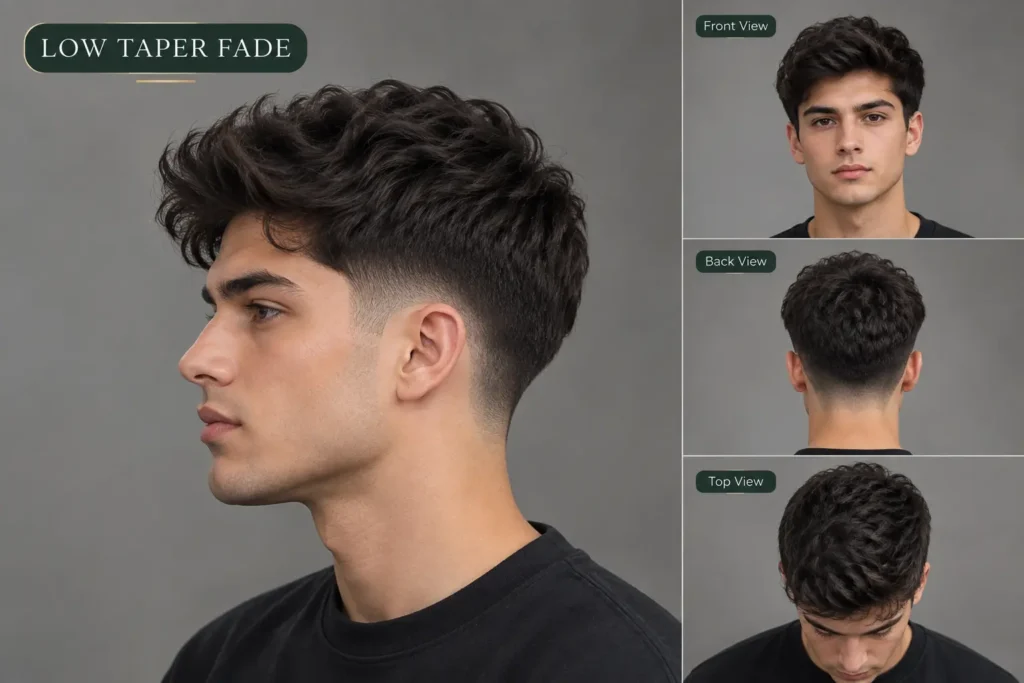
The low taper fade keeps the taper close to the ears, sideburns and lower neckline.
Because the transition stays low, more of the natural weight remains on the sides of the head. This gives the haircut a clean appearance without making the fade look too aggressive.
It is one of the easiest taper variations to adapt to different hairstyles and personal preferences.
What Does a Low Taper Fade Look Like?
A low taper gradually shortens the hair around the lower perimeter of the haircut while leaving more length above the taper.
The result is a soft and controlled transition rather than a dramatic change across the entire side of the head.
Best Features of a Low Taper
- Subtle appearance
- More hair retained on the sides
- Easy to pair with different hairstyles
- Suitable for professional settings
- Generally forgiving as it grows out
- Good option for first-time taper wearers
Best Hairstyles With a Low Taper
A low taper works particularly well with:
- Textured crop
- Side part
- Curly top
- Waves
- Comb over
- Short quiff
- Longer textured hair
Who Should Get a Low Taper Fade?
Choose a low taper if you want your haircut to look clean without being overly dramatic.
It is especially useful if you work or study in an environment where a very high-contrast haircut may not be ideal.
Best for: subtle style, professional environments, first-time taper wearers and versatile everyday haircuts.
Mid Taper Fade: The Balanced Choice
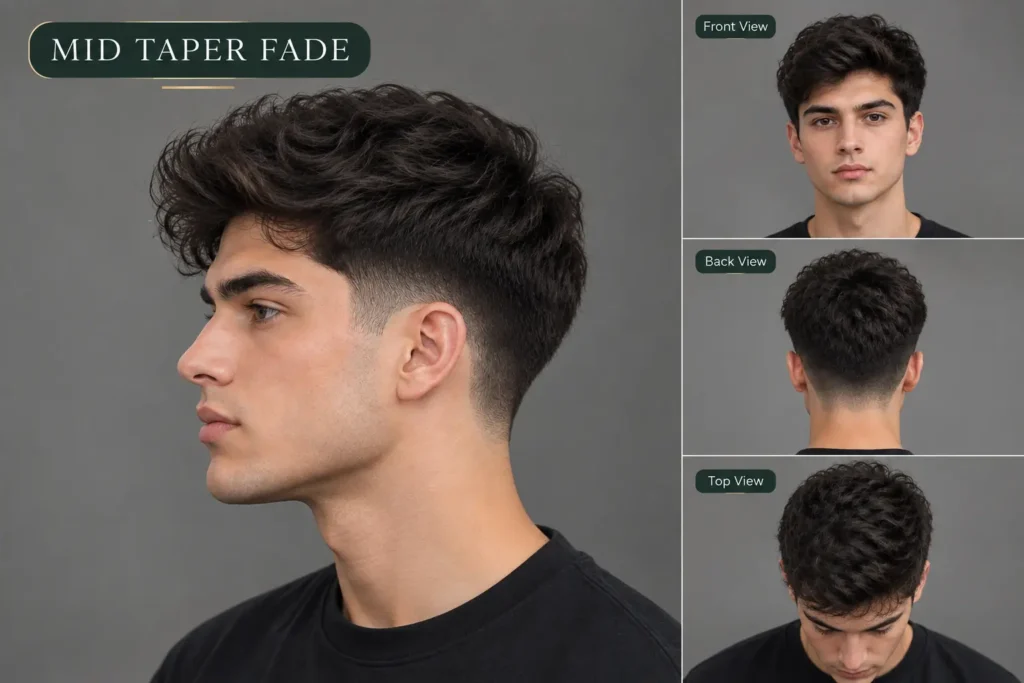
The mid taper fade sits between the low and high versions.
The taper begins higher than a low taper but doesn’t move as high as a high taper. This creates a noticeable but controlled change in the sides.
For many men, this makes the mid taper a useful middle ground between a conservative low taper and a more dramatic high taper.
What Does a Mid Taper Fade Look Like?
A mid taper creates more visible definition around the sides while still leaving enough hair to maintain a balanced overall shape.
It can work with both classic and modern hairstyles.
Best Features of a Mid Taper
- Balanced contrast
- Modern appearance
- Versatile styling
- Works with many face shapes
- Suitable for many hair textures
- More noticeable than a low taper
Best Hairstyles With a Mid Taper
Try pairing it with:
- Textured crop
- Quiff
- Side part
- Curly top
- Comb over
- Fringe
- Short messy hair
Who Should Get a Mid Taper Fade?
A mid taper is a strong option if you’re not looking for an extremely subtle or extremely bold haircut.
If you want the sides to look cleaner while still keeping a balanced silhouette, a mid taper may be the best starting point.
Best for: balanced styling, everyday wear, modern hairstyles and men who want moderate contrast.
High Taper Fade: Bold and Defined
The high taper fade places the taper higher on the sides, creating a stronger visual contrast between the shorter sides and the longer hair above.
Because more of the sides are affected, the haircut usually looks sharper and more noticeable.
What Does a High Taper Fade Look Like?
A high taper creates a stronger separation between the sides and the top.
This can make hairstyles with volume, texture or strong shape stand out more clearly.
Best Features of a High Taper
- Strong contrast
- Bold appearance
- Clean side profile
- Works well with statement hairstyles
- Creates a sharper overall silhouette
Best Hairstyles With a High Taper
A high taper can work especially well with:
- Curly tops
- Textured crops
- Quiffs
- Edgar-style cuts
- Spiky hairstyles
- Longer textured tops
- Modern mullets
Who Should Get a High Taper Fade?
Choose a high taper if you want your haircut to make more of a statement.
It can be especially effective when you want the sides to look significantly cleaner and the top to become the main focus.
Best for: bold styles, strong contrast and modern statement haircuts.
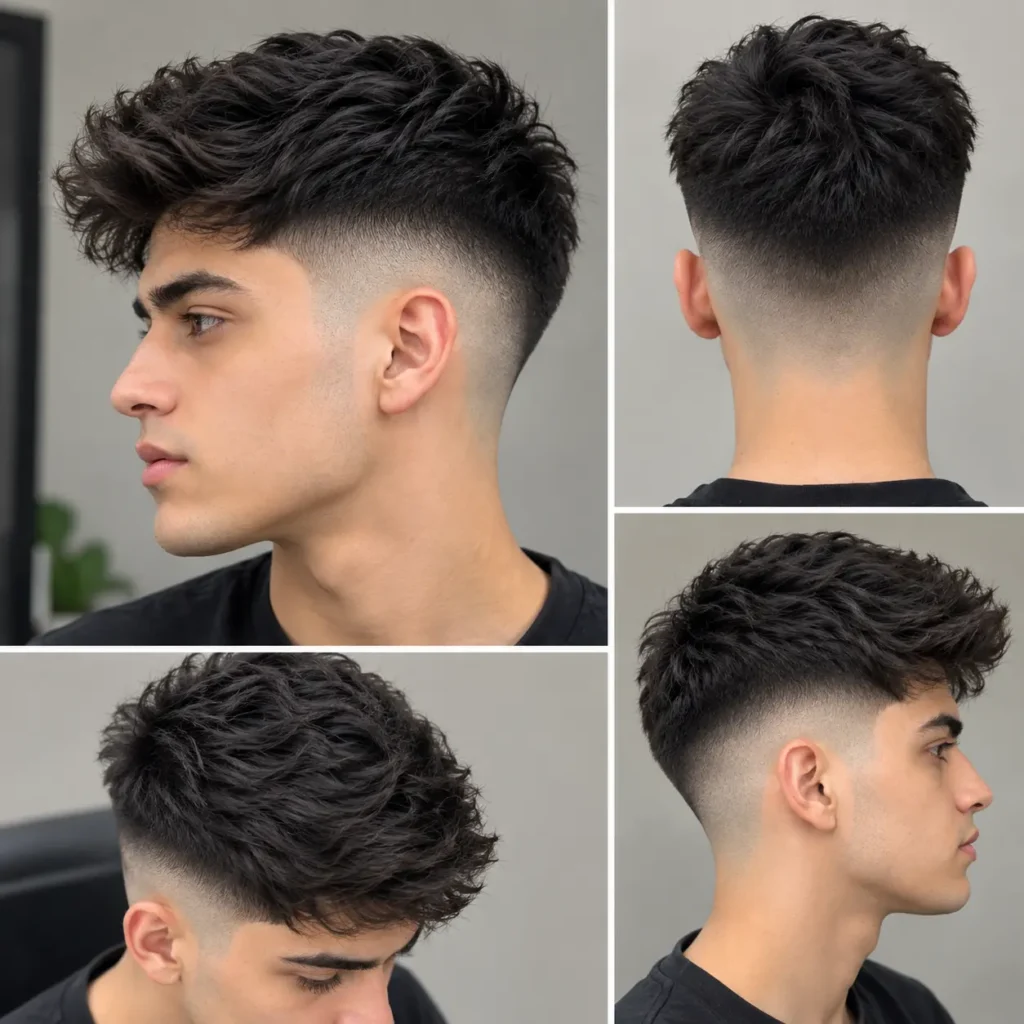
Low Taper Fade vs Mid Taper Fade
The biggest difference between a low taper and mid taper is the height of the transition.
A low taper keeps the blend closer to the lower sides and neckline, while a mid taper moves it higher.
Choose a Low Taper If:
- You want a subtle appearance
- You prefer more weight on the sides
- You want easier grow-out
- You work in a conservative environment
- This is your first taper
Choose a Mid Taper If:
- You want more definition
- You like moderate contrast
- You want a modern everyday haircut
- You don’t want the taper to be too subtle or too aggressive
Simple Decision
Want subtle? → Low taper
Want balanced? → Mid taper
Mid Taper Fade vs High Taper Fade
The difference between a mid and high taper is mainly how high the transition moves and how much side weight is removed.
A mid taper keeps the haircut more balanced, while a high taper creates a more noticeable contrast.
Choose a Mid Taper If:
- You want versatility
- You prefer moderate contrast
- You want a softer grow-out
- You want a haircut suitable for different settings
Choose a High Taper If:
- You want stronger contrast
- You prefer a sharper side profile
- You like bold hairstyles
- You don’t mind more frequent maintenance
Simple decision:
Want balanced? → Mid taper
Want bold? → High taper
Low Taper Fade vs High Taper Fade
This is the biggest contrast between the three choices.
A low taper preserves much more of the natural side shape, while a high taper changes the silhouette more noticeably.
| Low Taper | High Taper | |
|---|---|---|
| Contrast | Subtle | Strong |
| Side weight | More | Less |
| Appearance | Natural | Bold |
| Styling | Versatile | Statement-focused |
| Grow-out | Softer | More noticeable |
| Maintenance | Lower | Higher |
If you’re unsure, a low taper is generally the safer choice because it makes a smaller change to your overall haircut.
If you already know you want a bold transformation, a high taper gives you a much more noticeable result.
Which Taper Fade Is Best for Your Face Shape?
Your face shape doesn’t automatically determine your haircut, but it can help you decide how much contrast and height you want.
Oval Face Shape
An oval face generally gives you plenty of flexibility.
You can experiment with low, mid or high taper fades depending on your preferred style.
Best choices: Low, mid or high.
Round Face Shape
If your face is rounder, keeping some height and structure on top can help create a more elongated appearance.
A low or mid taper paired with a textured or slightly elevated top can work well.
Best choices: Low or mid taper.
Square Face Shape
A square face already has strong angles, so you can use a taper to clean up the sides without needing an extremely high transition.
A low or mid taper can maintain a balanced appearance.
Best choices: Low or mid taper.
Long or Rectangular Face Shape
If your face is naturally long, avoid automatically adding excessive height to the top.
A lower taper with moderate volume can help keep the overall proportions balanced.
Best choice: Low taper.
Heart-Shaped Face
A softer taper can help maintain balance between the forehead and jawline.
A low or mid taper paired with appropriate top length can work well.
Best choices: Low or mid taper.
For a more detailed guide, see our Taper Fade for Face Shape article.
Which Taper Fade Is Best for Your Hair Type?
Your hair texture can change how the same taper looks.
Straight Hair
Straight hair gives you plenty of styling options.
Low, mid and high tapers can all work, depending on how much contrast you want.
Best choices: All three.
Wavy Hair
A taper can clean up the sides while allowing the natural movement of wavy hair to remain visible on top.
A low or mid taper is particularly easy to style with natural waves.
Best choices: Low or mid taper.
Curly Hair
Curly hair pairs extremely well with taper fades because the clean sides create contrast against the natural curls.
Low, mid, burst and temple variations can all be adapted to curly hair.
Best choices: Low or mid taper.
Check out our complete Taper Fade for Curly Hair guide.
Afro-Textured Hair
Afro-textured hair can work beautifully with taper fades because the sides and neckline can be shaped while the natural volume remains on top.
Low, mid and high variations can all work depending on the desired silhouette.
Best choices: Low, mid or high.
Read our guide to Taper Fade for Black Men for more ideas.
Thick Hair
If your hair is thick, a mid or high taper can help remove some visual weight from the sides while keeping length on top.
Best choices: Mid or high taper.
Fine or Thin Hair
If you have fine hair, preserving weight can sometimes create a fuller appearance.
A low taper can be a good starting point because it doesn’t remove as much side weight.
Best choice: Low taper.
Which Taper Fade Is Best for Your Lifestyle?
This is something many haircut guides overlook.
Your lifestyle matters just as much as your face shape.
For School or College
A low or mid taper is usually easier to keep looking neat without making the haircut too dramatic.
For Office or Professional Work
A low taper is the safest option if you prefer a polished and conservative appearance.
For Athletes
A mid or high taper can create a clean, low-bulk appearance around the sides while keeping the top customized.
For Trend-Focused Styles
A high taper gives you more contrast and can work particularly well with modern textured hairstyles.
For Low-Maintenance Grooming
A low taper is generally the easiest choice if you want a haircut that still looks good as it grows out.
How Often Should You Maintain a Taper Fade?
The exact maintenance schedule depends on how quickly your hair grows and how sharp you want the haircut to remain.
As a practical guideline:
| Taper | Typical Touch-Up Window |
|---|---|
| Low Taper | About 3–4 weeks |
| Mid Taper | About 2–3 weeks |
| High Taper | About 2–3 weeks |
| Very Short/Skin Finish | Often sooner |
These are not strict rules. If you don’t mind a softer, grown-out appearance, you can wait longer.
The shorter and sharper the finish, the sooner regrowth tends to become noticeable.
How Does Each Taper Fade Grow Out?
One of the smartest ways to choose a haircut is to think about week three, not just the first day.
Low Taper Grow-Out
A low taper usually grows out softly because more of the natural side length remains.
Best if: You don’t want frequent barber appointments.
Mid Taper Grow-Out
A mid taper gradually loses some of its original definition as the sides grow.
Best if: You want a balance between sharpness and manageable maintenance.
High Taper Grow-Out
A high taper can show regrowth more noticeably because more of the side has been shortened.
Best if: You like keeping your haircut consistently sharp.
What Should You Tell Your Barber?
Don’t simply say:
“Give me a taper fade.”
That can leave too much room for interpretation.
Instead, tell your barber three things:
1. Tell Them the Height
Say:
“I want a low taper.”
or
“I want a mid taper.”
or
“I want a high taper.”
2. Explain How Short You Want the Finish
You can ask for a softer finish or a much shorter finish depending on your preference.
3. Explain What You Want on Top
For example:
“I want a low taper fade with a textured top and enough length to style it forward.”
Or:
“I want a mid taper with my natural curls left long on top.”
Or:
“I want a high taper with a short textured crop.”
The Best Tip: Bring a Photo
A reference photo is often the easiest way to communicate the exact result you want.
Common Mistakes When Choosing a Taper Fade
Choosing a Style Only Because It Is Trending
A haircut that looks great on someone else may not work the same way with your hair texture or face shape.
Choosing a High Taper Without Considering Maintenance
A high taper can look extremely sharp when fresh, but the contrast can become noticeable as the sides grow.
Not Explaining the Desired Height
“Short sides” doesn’t tell your barber where you want the taper to start.
Ignoring Your Hair Texture
Straight, curly, wavy and coily hair can produce very different results with the same taper.
Bringing Only a Front-Facing Photo
The side and back shape matter. Whenever possible, show your barber multiple angles.
Can You Combine Low, Mid and High Tapers With Other Styles?
Yes.
The taper height is only one part of the haircut. You can combine it with different hairstyles and design elements.
Low Taper + Curly Top
Keeps the curls as the main feature while cleaning up the perimeter.
Mid Taper + Textured Crop
Creates a balanced modern haircut with moderate contrast.
High Taper + Quiff
Makes the volume on top stand out more.
Low Taper + Side Part
Creates a classic, polished appearance.
Mid Taper + Line Up
Adds sharper definition around the hairline.
High Taper + Mullet
Creates a stronger modern and edgy silhouette.
Low, Mid or High Taper: Which One Should You Get?
Still confused?
Use this simple decision guide:
| Your Preference | Best Choice |
|---|---|
| Subtle and natural | Low Taper |
| Professional and polished | Low Taper |
| First taper haircut | Low Taper |
| Balanced and versatile | Mid Taper |
| Modern everyday style | Mid Taper |
| Moderate contrast | Mid Taper |
| Bold appearance | High Taper |
| Strong side contrast | High Taper |
| Statement hairstyle | High Taper |
| Low maintenance | Low Taper |
| Most flexible middle ground | Mid Taper |
Our Simple Recommendation
Choose a Low Taper if you want:
Clean + subtle + versatile.
Choose a Mid Taper if you want:
Balanced + modern + adaptable.
Choose a High Taper if you want:
Bold + sharp + high contrast.
Frequently Asked Questions
Is a low, mid, or high taper fade better?
None is universally better. A low taper is best for subtle styling, a mid taper offers a balanced look, and a high taper is better for stronger contrast. The right choice depends on your hair, face shape and lifestyle.
Which taper fade is most popular?
Low taper fades are particularly popular because they offer a clean appearance while remaining versatile. Mid tapers are also widely chosen because they sit between subtle and bold.
Is a low taper better for a round face?
A low taper can work well with a round face, especially when the top has some controlled height or texture. However, the overall hairstyle matters more than the taper height alone.
Is a mid taper good for all hair types?
A mid taper can be adapted to straight, wavy, curly and coily hair. The barber should adjust the blend and top styling according to the hair’s natural texture.
Is a high taper good for curly hair?
Yes. A high taper can create strong contrast against curly hair on top. However, the higher transition produces a bolder appearance than a low taper.
Which taper fade lasts the longest?
A low taper generally grows out more softly because more of the natural side length is preserved. Very short or skin-level finishes usually need earlier touch-ups to maintain their sharp appearance.
Should I get a low or mid taper?
Choose a low taper if you want subtle and conservative. Choose a mid taper if you want more definition and a modern balanced look.
Should I get a mid or high taper?
Choose a mid taper for moderate contrast and versatility. Choose a high taper if you want a bolder, sharper appearance.
Can I get a taper fade with long hair?
Yes. A taper can be combined with medium or long hair on top. The contrast between the clean perimeter and longer top can create a modern hairstyle.
Final Verdict: Low vs Mid vs High Taper Fade
The best taper fade isn’t necessarily the one that is trending the most. It is the one that fits your hair, face shape, lifestyle and preferred level of contrast.
A low taper fade is the safest choice when you want a subtle, polished and versatile haircut.
A mid taper fade is the middle ground, giving you noticeable definition without going too extreme.
A high taper fade is the choice for men who want stronger contrast and a more eye-catching hairstyle.
If you’re getting your first taper and aren’t sure what to choose, starting with a low or mid taper is usually the easiest way to experiment without making an overly dramatic change.
And whichever one you choose, show your barber a reference photo and clearly explain the height, finish and top length you want.